
.webp)









A winning holiday e-commerce strategy goes beyond single campaigns. Plan the full season across five phases, from pre-season prep to post-holiday retention. Personalize experiences by region, shopper intent, and timing, optimize your site for speed and checkout simplicity, prepare inventory and shipping early, and use tools like Geo Targetly to deliver localized offers, deadlines, and messages that convert better across every market.
Key takeaways:
- Plan holiday e-commerce around a five-phase seasonal lifecycle
- Segment shoppers and tailor offers to their buying behavior
- Personalize experiences using geography, urgency, and timing
- Improve site speed, checkout flow, and mobile UX
- Prepare inventory, shipping, and support before the rush begins
The holiday season drives anywhere from 20-40% of annual revenue for many e-commerce businesses. It brings volume, urgency, and shoppers who behave very differently from the rest of the year.
Competition gets intense, acquisition costs rise, and the brands that show up prepared outperform the ones who scramble in November.
To win Q4, you need a lifecycle strategy that spans pre-season planning, early-bird engagement, peak sales, last-minute urgency, and post-holiday retention.
When each phase supports the next, you create momentum instead of one sales spike followed by silence.
As a bonus, you’ll see how tools like Geo Targetly can help you create localized holiday experiences that convert better across every region.
Why you need a holiday ecommerce strategy, not just holiday campaigns
Holiday buying isn’t a single shopping moment. It’s a season, and shoppers move through it in waves.
What the data shows:
- Nearly 50% of holiday shoppers start browsing before November.
- Cart abandonment climbs above 70% during Q4.
- Some retailers report ad-cost inflation of 20-25% or more during holiday months, raising the customer acquisition costs.
Campaigns alone don’t solve that. They create short spikes, but not momentum.
A holiday strategy gives you:
- A plan for early browsers, peak buyers, and last-minute rushes
- Forecasting and inventory decisions made before demand hits
- Messaging aligned across email, ads, onsite content, and fulfillment
- A retention path, so holiday customers return in January
Campaigns are one-offs, but a strategy carries you from October through post-holiday retention.
Plan using a holiday ecommerce lifecycle framework
Early planners, deal hunters, procrastinators, and post-holiday browsers all move differently during the holiday season. Planning with phases means you’re never scrambling to react, and you’re always one step ahead.
Here’s how to structure Q4 so every stage builds on the one before it, and how Geo Targetly can help along the way.
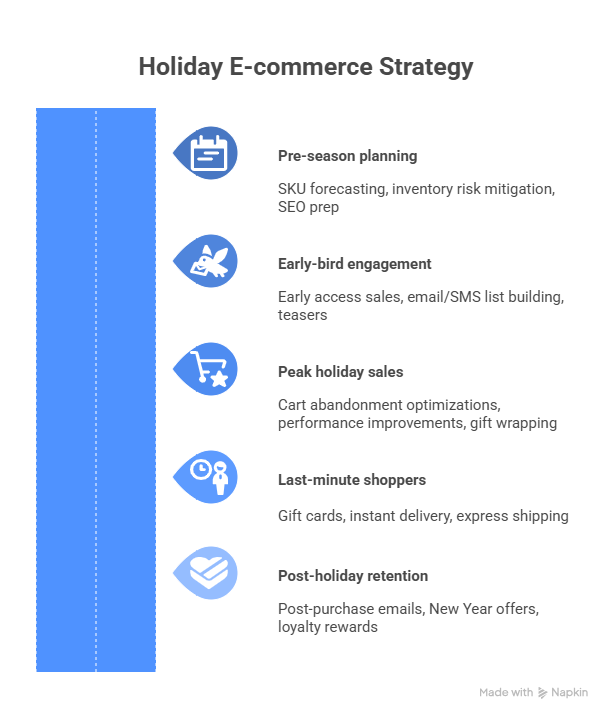
Phase 1: Pre-season planning (August to October)
This acts as your prep window. No pressure, just setup.
Your focus:
- Forecast SKUs using last year’s bestsellers and trending search terms
- Prepare for sellouts by tightening SKUs or planning bundles early
- Build holiday landing pages now, so they have time to rank
- Refresh last year’s top holiday content instead of starting from scratch
- Lock in promo dates, creative, budgets, deadlines
Where Geo Targetly helps now:
- Create region-specific holiday pages in advance
- Automatically send US shoppers to US offers, UK shoppers to UK offers
- Localize pricing and messaging before traffic spikes
This is the foundation for your whole strategy. Set it up early and you’ll be thanking yourself in November.
Phase 2: Early-bird engagement (October to mid-November)
Shoppers are already browsing. They’re not always buying yet, but they’re definitely paying attention.
Your goal is to warm them up before the Black Friday chaos.
What works well:
- Early access for VIP customers or subscribers
- List growth (email + SMS) through waitlists or sneak peeks
- Teaser campaigns instead of heavy discounts
- Soft-launch bundles or “preview pricing” for early movers
Geo Targetly example moves:
- Geo popups showing shipping cutoffs by country
- Localized messaging like “Holiday delivery still guaranteed in Canada”
- Highlight perks where they actually apply, not worldwide
Friendly, relevant, low-friction messaging wins here.
Phase 3: Peak holiday sales (Black Friday to Christmas)
This is the main event. Everyone’s live, acquisition is expensive, and shoppers move fast.
To maximize conversions:
- Streamline checkout and make payment options obvious
- Push bundles, gift sets, and shipping-threshold offers
- Monitor sell-through daily and shift budget toward top movers
- Increase support response speed (live chat helps a lot)
Geo Targetly in action:
- Auto-convert currency based on location
- Swap banners and content blocks per region
- Redirect shoppers to the right holiday sale page instantly
No clicking around to find the right offer, just directing customers straight to what they need.
Phase 4: Last-minute shoppers (December 18 to 24)
These buyers are frantic and fully motivated and they want solutions fast.
Lean on:
- Gift cards and instant delivery products
- Guaranteed-by-Christmas messaging where it’s true
- Countdown timers tied to actual shipping cutoffs
- “Still on time” and “no-shipping-required” gift collections
Geo Targetly helps by:
- Showing different cutoffs per region automatically
- Hiding express shipping where it’s no longer available
- Prioritizing digital gifts when it’s too late to ship
If you reduce decision time, you win this group easily.
Phase 5: Post-holiday retention (January)
Most brands disappear here, don’t be one of them. This is where you turn seasonal buyers into long-term customers.
The focus:
- Win-back campaigns with loyalty rewards or new-year perks
- Target gift recipients who didn’t choose the item, but may repurchase
- Smooth returns with no hoops and no headaches
- Discount what's left without cheapening the brand
With Geo Targetly, you can:
- Send different retention offers by region
- Localize loyalty benefits (ex. free AU shipping vs US bundles)
- Personalize product recommendations post-purchase
This is how holiday revenue becomes year-round growth.
When you plan the season across phases instead of reacting week by week, every part of Q4 becomes easier: forecasting, conversion, fulfillment, even January retention.
The next layer is understanding who’s actually shopping during each window, because, as we’ve touched on, not every buyer behaves the same.
Understand holiday shopper segments & tailor your offers
Some are early planners, others are last-minute buyers. Some are loyal customers, others are gift buyers who’ve never heard of your brand.
To drive real results during the holiday season, you need to understand who your shoppers are, what motivates them, and how to speak directly to their needs.
Segmenting your audience allows you to create offers and experiences that feel relevant, because they are. Here's how to break it down.
Identify key holiday shopper segments
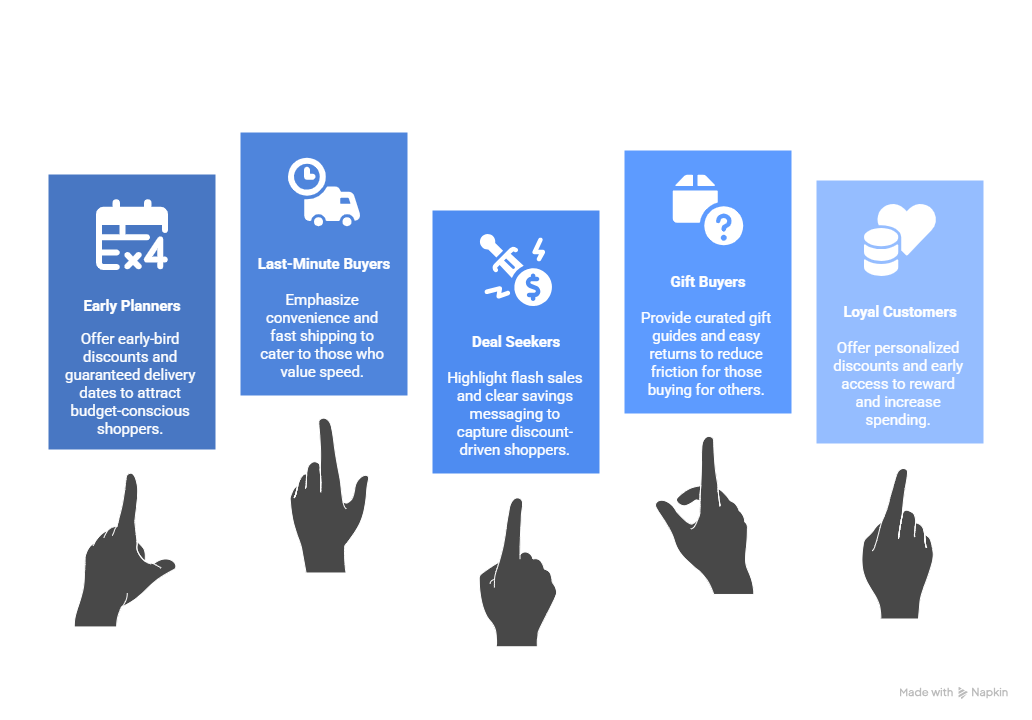
Start by analyzing your historical data from previous holiday seasons. Look for patterns in timing, purchase behavior, average order value, and acquisition source. Most holiday audiences fall into a few common buckets:
- Early planners: These shoppers start browsing and buying in October or early November. They’re often budget-conscious and respond well to early-bird discounts or bundles.
- Last-minute buyers: Often shopping in mid to late December, they value convenience and fast shipping. Highlight delivery cutoffs and promote digital gift cards.
- Deal seekers: They’re motivated by discounts and often shop during Black Friday or Cyber Monday. Flash sales, limited-time offers, and clear savings messaging work well here.
- Gift buyers: These aren’t your typical customers. They’re buying for someone else and may not know your brand. Use curated gift guides, clear product descriptions, and easy returns to reduce friction.
- Loyal customers: They’ve purchased before and are more likely to return if the offer feels personal. Exclusive early access or loyalty rewards can increase their spend.
You don’t need to reinvent your entire marketing strategy for each group, but you do need to adjust your messaging, timing, and offer structure based on what each segment values.
Tailor offers to match shopper intent
After you’ve identified your segments, map out what each group cares about most. Then build offers that speak to those priorities.
Examples:
- For early planners, run a “holiday preview week” in late October with bundle deals and guaranteed delivery dates.
- For gift buyers, create a guided quiz that recommends gifts by personality or price range. Include gift wrap options and a clear return policy.
- For deal seekers, schedule your biggest promotions around Black Friday and Cyber Monday, but use email segmentation to show different products based on past behavior.
- For loyal customers, send a “thank you” campaign with a personalized discount code and early access to your best holiday deals.
Use your CRM or email platform to segment audiences and trigger these campaigns automatically. If you’re using paid ads, build separate audiences and creatives for each segment.
A last-minute buyer scrolling Instagram on December 20th doesn’t need to see your early bird discount from November.
Targeted offers get shoppers in the door, while personalization keeps them moving to checkout.
So, the next layer in your holiday strategy is building a personalization engine that adapts to timing, urgency, and buyer behavior automatically.
Build a personalization engine for holiday success
Shoppers in Q4 are flooded with promos, emails, bundles, countdown timers. Competing on price alone quickly becomes a race to the bottom, and one most brands can’t afford to win.
Personalization, on the other hand, creates relevance. It makes the shopping experience feel tailored, intentional, and easier to act on.
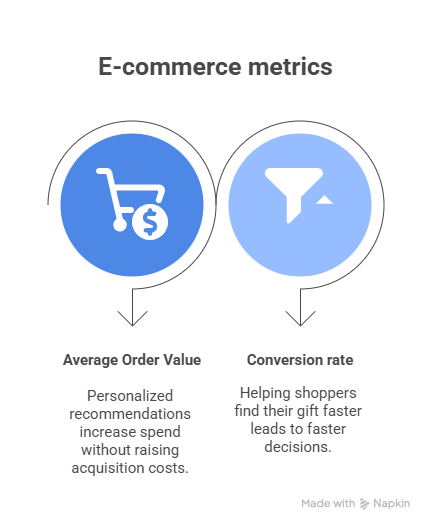
Personalization affects the two metrics that matter most during holiday peak:
- Average Order Value (AOV)
When people see products that match their interests, location, or browsing behavior, they add more to cart. Personalized upsells and gift recommendations increase spend without raising acquisition costs. - Conversion rate
The right product, the right offer, the right moment. Reducing complexity and helping shoppers find their gift faster leads to faster decisions and fewer abandoned sessions.
During the holidays, speed matters, but relevance matters more. Personalization helps shoppers feel confident, seen, and ready to complete their purchase instead of bouncing to another tab.
How Geo Targetly enhances personalization for the holiday season
Geo Targetly helps you personalize experiences based on location, without needing complex integrations or heavy development work.
During the holidays, this kind of targeting becomes especially useful when shoppers expect fast shipping, local offers, and region-specific messaging.
Here’s how Geo Targetly can power your holiday personalization engine:
- Localized landing pages: Automatically redirect visitors to region-specific pages. A shopper from Toronto sees CAD pricing, Canadian shipping options, and holiday promotions relevant to their region. Someone in London sees the UK version of the same page. No manual segmentation required.
- Dynamic content blocks: Use Geo Targetly to change banners, CTAs, or product recommendations based on the visitor’s location. For example, promote winter gear in colder regions while highlighting travel accessories in warmer climates. This keeps your messaging relevant without needing multiple versions of the same page.
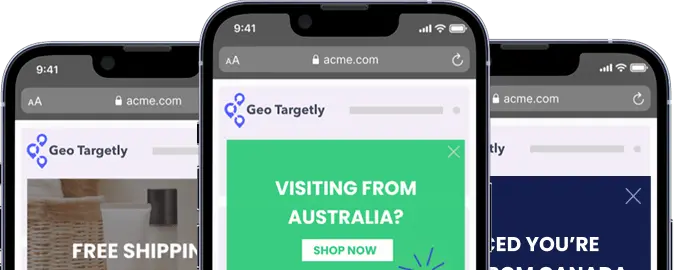
- Geo-specific popups and notifications: Trigger location-based popups to highlight local shipping deadlines or regional discounts. A user in New York might see a message like “Order by Dec 20 for guaranteed Christmas delivery in the Northeast.” That kind of urgency drives action.
- Personalized currency and language options: Automatically show prices in the local currency and switch language settings based on the visitor’s country. This reduces friction at checkout and builds trust, especially important for first-time holiday shoppers.
- Custom redirects for promotions: Run targeted holiday campaigns by redirecting traffic from specific regions to dedicated promo pages. For example, a Black Friday deal might be available only in the US. Geo Targetly can route eligible users to that page while showing alternative offers elsewhere.
Geo Targetly doesn’t change your holiday plan, it amplifies it, making your offers feel personal, relevant, and aligned with each shopper’s reality no matter where they’re browsing from.
If you want your holiday personalization to scale instantly across regions, this is one of the easiest ways to do it.
Optimize user experience for peak holiday traffic
Holiday shoppers don’t browse slowly. They skim, compare, and make decisions fast. If your site can’t keep up, even the best offers won’t convert.
Key areas to strengthen before peak season:
- Page speed
Compress images, reduce scripts, and run load tests. Every second saved protects conversions under heavy traffic. - Mobile-first experience
Most holiday shopping happens on phones. Buttons need to be large, navigation simple, and pages quick to scroll. - Simplify checkout
Fewer steps, fewer fields, fewer surprises. Offer guest checkout, auto-fill where possible, and make shipping costs clear early. - More payment options
Whether it’s Apple Pay, Google Pay, Klarna, or PayPal, offer what your shoppers already use so they don’t drop off. - Better search and filtering
Help shoppers find what they want quickly with filters for price, shipping timelines, categories, recipient, and gift type.
Small UX improvements compound fast during Q4. Conversion lifts of even a few percentage points are multiplied by holiday traffic volume.
Improve fulfillment, shipping, and support before holiday rush
Holiday demand is predictable. The chaos comes from poor preparation. The smoother your backend runs, the fewer sales you lose to delays, out-of-stock issues, or overwhelmed support teams.
Key areas to reinforce early:
- Fulfillment workflows
Automate where you can, simplify where you can’t. Batch picking, printing, packing, and label generation saves minutes per order when volume spikes. - Shipping confidence
Set clear delivery timelines, update cutoffs weekly, and communicate it everywhere: product pages, cart, checkout, email footers. - Stock + packaging
Reorder early. Once December hits, restocking gets expensive or impossible. Same for packaging, tape, boxes. - Contingencies
Have at least one backup carrier. Weather, capacity, and strikes have derailed entire regions during Q4 in past years. - Support capacity
Prepare macros, FAQs, and self-serve help. Add live chat if volume grows. Most holiday tickets are predictable, so be sure to answer them before they’re asked.
Create a seasonal SEO and content plan
Holiday traffic comes in waves, and SEO only pays off if you prepare before the wave hits. Think months ahead, not days. The earlier your content is indexed, the more authority it builds by Q4.
Focus on:
- Seasonal landing pages
Build gift guides, holiday collections, and product category pages early so they have time to rank and earn backlinks. - Refresh last year’s pages
Update pricing, stock, images, and CTAs. Keep the URL but improve relevance. This is often faster than creating something new. - Internal linking
Funnel authority toward your holiday pages with links from your homepage, blog, and navigation. Make them easy to find. - Structured data
Use Product schema and Sale/Offer schema where applicable. Rich snippets improve CTR during high-competition periods. - Localized content (if selling cross-region)
Gift guides by country or holiday timing (“Best Gifts Under €50 for Germany”) often rank faster and convert better than broad global content.
Your content doesn’t need to be massive but it does need to be useful, discoverable, and indexed before peak demand hits.
Key metrics to track throughout the holiday season
Holiday performance moves fast, so you need to monitor what’s working in real time, not weeks later. These metrics tell you whether shoppers are converting, where friction exists, and which products deserve priority.
Track daily during peak weeks. Small changes compound quickly when volume is high.
Holiday ecommerce checklist
The moving parts of a holiday strategy are easy to drop when things get busy. This checklist pulls everything into one place so you can prep confidently, spot gaps early, and stay ahead of the rush rather than reacting to it.
Audit and stress-test your e-commerce infrastructure
Before you think about promotions or shipping, start with your store’s foundation.
- Load test your site: Use tools like Loader.io or Apache JMeter to simulate traffic surges. If your store crashes on Black Friday, discounts won’t matter.
- Check mobile performance: Over 70% of holiday traffic comes from mobile. Use Google’s Lighthouse or PageSpeed Insights to identify slow-loading elements.
- Review your checkout process: Test for bugs, friction points, and unnecessary fields. A one-page checkout or guest checkout option can reduce cart abandonment.
- Backup everything: Automate daily backups of your store, customer data, and product listings. If something breaks, you’ll need a fast restore point.
Finalize your promotional calendar and assets
Holiday campaigns are about timing, consistency, and clarity just as much as they are about discounts.
- Map out promotions by date: Include Black Friday, Cyber Monday, and any niche holidays relevant to your audience. Plan start/end times down to the hour.
- Create all creative assets in advance: Banners, email headers, social graphics, and product images should be ready at least two weeks ahead.
- Write and schedule emails: Don’t rely on last-minute sends. Use your email platform’s automation features to schedule campaigns and follow-ups.
- Prep your ad campaigns: Set up audiences, creative, and budgets early. Platforms like Meta and Google often experience ad approval delays during the holidays.
Optimize inventory and fulfillment processes
Stockouts and shipping delays can kill customer trust. Get ahead of both.
- Forecast demand based on past data: Use last year’s sales data to project top-selling SKUs. Increase stock accordingly.
- Set inventory buffers: Don’t list 100 units if you only have 100. Account for returns, damage, or miscounts.
- Update shipping deadlines: Clearly communicate last-order dates for Christmas delivery. Add banners or cart messages to reinforce them.
- Coordinate with fulfillment partners: Whether you use a 3PL or ship in-house, confirm their holiday schedules and cutoff times.
Tighten up customer support and policies
Holiday shoppers expect fast answers and clear policies.
- Extend support hours: If possible, offer weekend or evening coverage during peak weeks.
- Use live chat or chatbots: Even a basic chatbot can handle FAQs and reduce ticket volume.
- Review return and refund policies: Make them easy to find and understand. Consider extending return windows for gifts.
- Train your team: Prep support staff with scripts, escalation paths, and product knowledge.
Final checks before launch
Once everything’s in place, run a full walkthrough.
- Place a test order: Go through the entire customer journey from homepage to confirmation email to catch last-minute issues.
- Check your analytics: Make sure tracking is working for key events like add-to-cart, checkout, and conversion.
- Enable downtime alerts: Use tools like UptimeRobot or Pingdom to get notified if your site goes down.
Holiday wins aren’t made in the final stretch. They’re made in the preparation. With this checklist, you remove easy-to-miss risks and keep your attention exactly where it matters: converting traffic into revenue.
Conclusion
Holiday sales go well when the essentials are handled early: clear messaging, fast pages, enough inventory, and support that can keep up. A little structure now prevents a lot of stress later, and helps every marketing effort work harder during peak days.
If you also sell into different countries, personalization matters even more. Geo Targetly makes it simple to show the right currency, content, and local details automatically, so shoppers get a smoother experience without extra work on your side.
See how Geo Targetly supports holiday campaigns.
FAQ
What is the most important part of a holiday e-commerce strategy?
Planning early enough that you’re not reacting during peak season. If your inventory, campaigns, UX, and messaging are ready before traffic hits, you win more with less effort.
How early should I start planning my holiday e-commerce campaigns?
August or September for prep, October for engagement, November and December for execution. The earlier the setup, the smoother the high-volume weeks feel.
How can I personalize holiday shopping experiences without slowing down my website?
Keep personalization lightweight. Swap dynamic blocks, popups, or offers based on location or behavior, not full-template rebuilds. The goal is relevance, not complexity.
How do I increase conversions during the busiest days of the holiday season?
Make buying easy. Clear pricing, fast checkout, shipping visibility, and strong mobile UX move the needle faster than bigger discounts.
What are the best tactics for last-minute holiday shoppers?
Gift cards, fast shipping options, express delivery messaging, and “still in time for Christmas” banners. Remove uncertainty and urgency does the rest.
How do I reduce cart abandonment during the holiday season?
Show shipping costs early, offer guest checkout, support multiple payment methods, and trigger fast recovery emails or SMS. Most abandonment is friction, not intent.
How can I prepare my website for high traffic during holiday sales?
Load test ahead of time, compress assets, and monitor performance. If pages stay fast under pressure, conversions stay steady too.
How do I handle shipping and returns during the holiday rush?
Set clear delivery timelines, publish return rules in plain language, and stock packaging in advance. Clarity reduces support volume and builds trust.
What type of holiday content performs best for e-commerce SEO?
Gift guides, price filters, bundles, and landing pages built around specific audiences or regions. Narrow focus tends to rank and convert faster than broad “holiday” pages.
How do I turn holiday shoppers into repeat customers in January?
Follow up is a great method. Send thank-you messages, loyalty offers, product recs, or onboarding emails to giftees. Post-holiday silence loses more customers than pricing ever will.
Can personalization help with international holiday shoppers?
Yes, especially when timing, currency, and shipping vary by region. A shopper in Canada doesn’t share deadlines with someone in Spain. Relevance increases conversions.

Copywriter